
Koh Samui Facts: How Big Is Koh Samui, and Other Things to Know
Quick answer: Koh Samui covers about 229 square kilometres, making it Thailand’s second-largest island after Phuket. It is roughly 25 km long and 21 km wide, and the ring road around the island is about 50 km, which takes around 1.5 to 2 hours to drive without stops.
| Area | About 229 km² |
| Size | Roughly 25 km long and 21 km wide |
| Ring road | About 50 km (Route 4169), around 1.5 to 2 hours to drive |
| Location | Gulf of Thailand, about 35 km off the mainland, in Surat Thani province |
| Highest point | Khao Pom, about 635 metres |
| Neighbouring islands | Koh Phangan, Koh Tao and the 42 islands of Ang Thong National Marine Park |
| Weather | Driest January to April, rainy season October to December |
How Big Is Koh Samui?
Koh Samui is about 229 square kilometres, roughly 25 km from north to south and 21 km from east to west. That makes it Thailand’s second-largest island after Phuket, which is a little over twice the size.
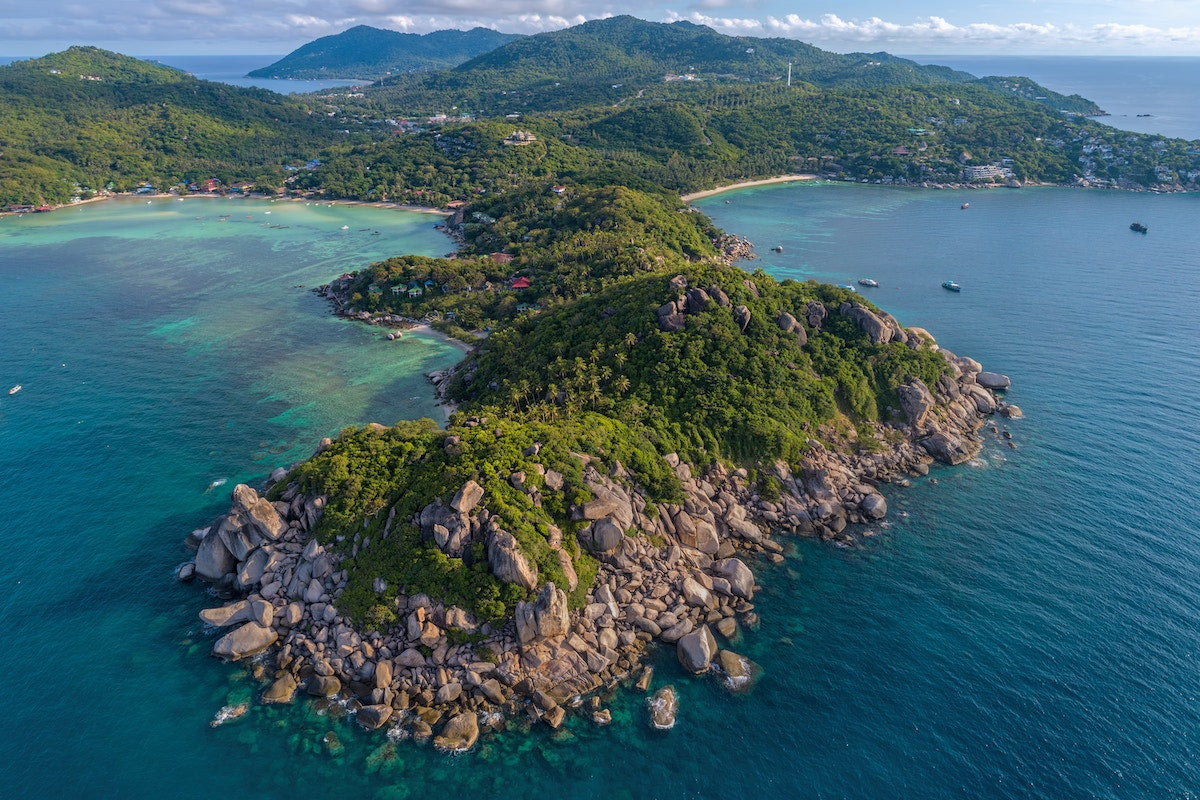
In practice, Samui feels compact. Most of the island’s hotels, beaches and restaurants sit along the coast, and the centre is mostly jungle-covered hills. Getting from Chaweng to Lamai takes about 15 to 20 minutes by car, and from Chaweng to Nathon on the west coast about 30 to 40 minutes, depending on traffic.
How Long Does It Take to Drive Around Koh Samui?
The main ring road, Route 4169, loops around the island for about 50 km. Driving the full loop without stopping takes around 1.5 to 2 hours, but most people make a day of it, stopping at viewpoints, temples and beaches along the way.
If you would rather someone else did the driving, our guided island tours cover the island’s highlights with a local guide.
Where Is Koh Samui?
Koh Samui is in the Gulf of Thailand, on the east side of southern Thailand, about 35 km off the mainland coast. It is part of Surat Thani province, and forms a small chain with Koh Phangan and Koh Tao to the north. Ang Thong National Marine Park, a group of 42 islands, lies to the west.
Because it sits on the Gulf side rather than the Andaman side (where Phuket and Krabi are), Samui has a different weather pattern. It is driest from January to April, stays mostly dry through to September, and has its main rainy season from October to December.
More Interesting Facts About Koh Samui
1. Its highest point is Khao Pom
The hills in the middle of the island rise to Khao Pom, at about 635 metres. The interior is a mix of jungle, waterfalls and coconut plantations, which is why adventure activities in Koh Samui such as jungle, waterfall and zip line trips are popular here.
2. Nobody is quite sure where the name comes from
There are a few theories. One is that “Samui” comes from the mui tree, a tree native to the island. Another links it to the Chinese word “Saboey”, often translated as “safe haven”, from the days when Chinese traders sheltered here. “Koh” simply means island in Thai.
3. It was a coconut island long before it was a holiday island
For generations Koh Samui’s economy was built on coconuts, and at its peak the island was shipping millions of coconuts to Bangkok every month. Coconut palms still cover much of the island, and coconut runs through local food.
4. Tourism only really began in the 1970s
Koh Samui was a quiet community of fishermen and coconut farmers until the first backpackers arrived in the early 1970s. Today it welcomes travellers from all over the world, while still keeping a relaxed island pace.
5. Its airport is privately owned
Samui International Airport opened in 1989 and is owned by Bangkok Airways. Its open-air terminal, with thatched roofs and tropical gardens, is one of the most distinctive arrival experiences in Thailand.
6. The Big Buddha is the island’s best known landmark
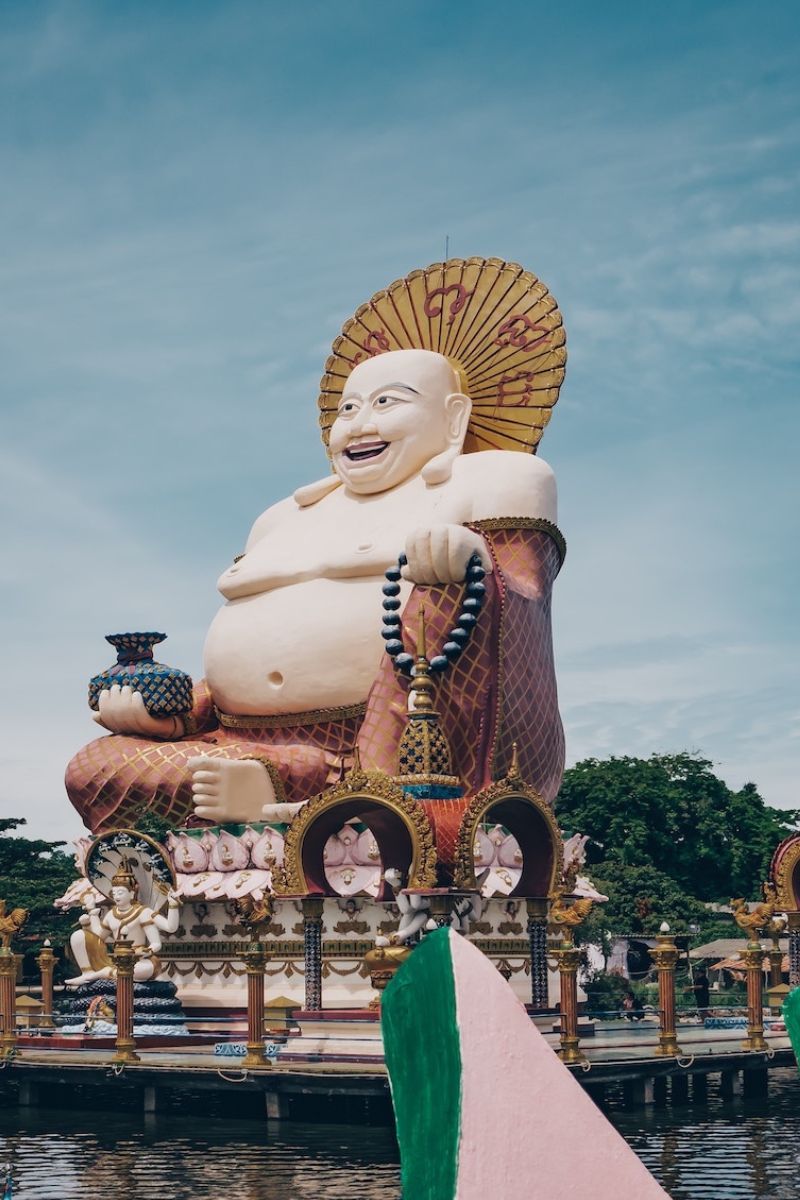
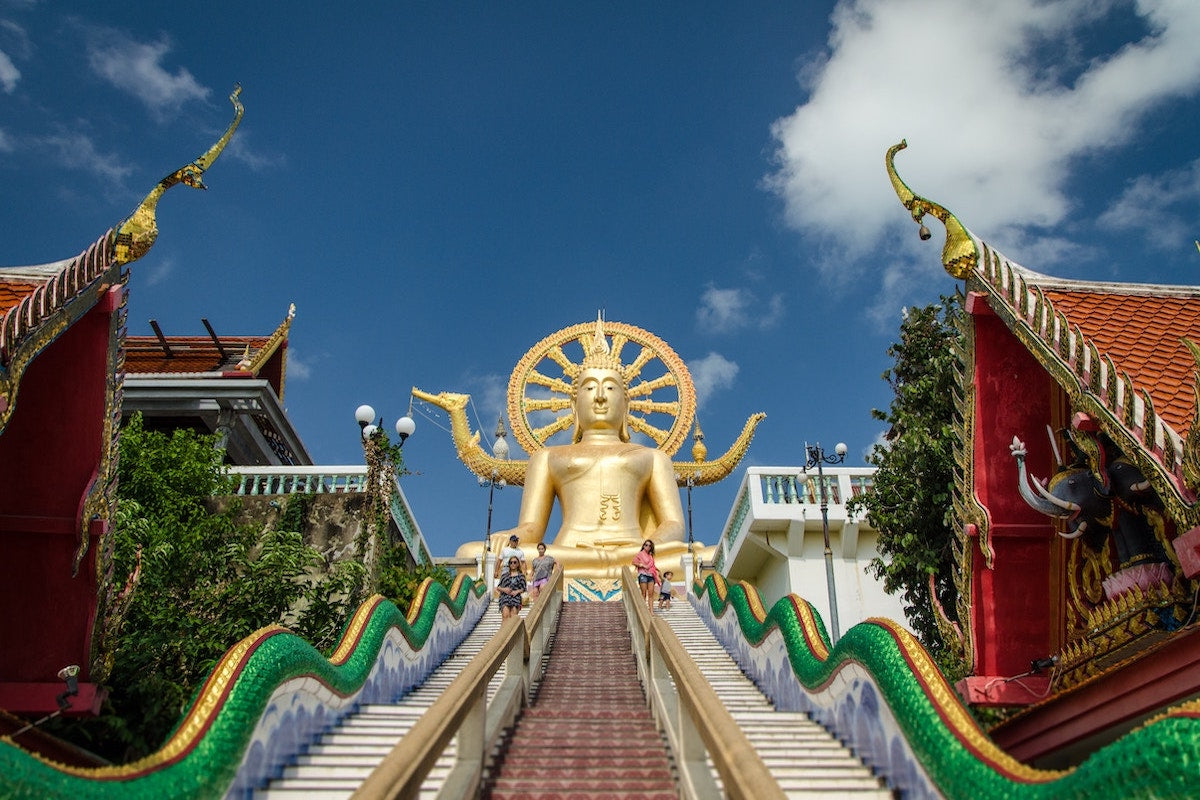
The 12-metre golden Big Buddha at Wat Phra Yai sits on a small island joined to Samui by a causeway, near Bangrak in the north-east. Other well known sights include Wat Plai Laem, the Hin Ta and Hin Yai rock formations near Lamai, and Na Muang Waterfall.
7. It has a rich cultural mix
Koh Samui’s culture blends Thai, Chinese and Muslim influences, with Buddhist temples, Chinese shrines and fishing villages such as Hua Thanon. Festivals including Songkran, the Thai New Year water festival in April, are celebrated across the island.
Koh Samui Facts: FAQs
How big is Koh Samui?
Koh Samui is about 229 square kilometres, roughly 25 km long and 21 km wide. It is Thailand’s second-largest island after Phuket.
Is Koh Samui bigger than Phuket?
No. Phuket is a little over twice the size of Koh Samui, at around 540 square kilometres.
How long does it take to drive around Koh Samui?
The ring road is about 50 km, and driving the full loop without stops takes around 1.5 to 2 hours.
Where is Koh Samui?
Koh Samui is in the Gulf of Thailand, about 35 km off the mainland, in Surat Thani province. Koh Phangan and Koh Tao are to the north, and Ang Thong National Marine Park is to the west.
What is the highest point on Koh Samui?
Khao Pom, in the centre of the island, at about 635 metres.
What is the best time to visit Koh Samui?
January to April is usually the driest period, February to September has the calmest seas for boat trips, and the main rainy season runs from October to December. See our guide to the best time to visit Koh Samui for more detail.
Ready to explore? Browse all of our Koh Samui tours and experiences, from island tours to Ang Thong Marine Park trips.